PVAH

Thursday, June 13, 2019

What is Stomatitis??

Stomatitis is a chronic, debilitating bacterial infection and inflammation of the oral tissues that usually begins in the periodontium (the gums and soft tissue surrounding the teeth) or the oropharyngeal area. It is caused by the plaque bacteria present in the mouth and may occur concurrently with gingivitis or glossitis (inflammation of the tongue).  The cause is thought to be an exaggerated immune response to plaque in the mouth.  Basically, the cat is allergic to its own teeth. 

You may see your cat excessively drooling, exhibit difficulty eating/chewing, a decrease in grooming habits and extreme bad breath.  Oral examination will often reveal severe inflammation of the gum tissue and cheeks along with tooth resorption. There are many different ways to help treat and control stomatitis, but the most successful is usually extraction of the affected teeth. The doctor may recommend antibiotics, pain medication, dental extractions, or a combination of therapies depending on the severity of the condition.


Tuesday, March 6, 2018

Working Dog Differences

Service dogs, emotional support animals, and therapy animals. They all have important jobs to do but their jobs are all very different! There is a lot of misinformation online about them, so we're here to help set the record straight! To start off, here's a good chart to visualize the main differences between the three!


There are a lot of websites out there that say you can register your "service animal" or "emotional support animal", but unfortunately these are all scams that are just looking for people's money. There is no actual certification process for either service dogs or ESAs. Here you can see people have "registered" their pet rocks and raptors from Jurassic Park just to show how much of a scam it really is!


Here are the key differences to remember for the three types of dogs:
  • Service dogs: A service dog is defined as a dog that is individually task trained to help an individual with a disability. The tasks that the dog is trained to do have to directly relate to that person's disability; for example, a dog who is trained to pick things up off the floor for someone who is wheelchair bound and cannot easily pick them up themselves. Only dogs, and in some states miniature horses, are allowed to be service animals according to federal law. There is NO certification for service dogs, however, they have to be trained for an individual with a disability and are allowed to accompany them into any public venue because they are considered a piece of medical equipment that helps mitigate their disability.
    Here is a link to frequently asked questions about service dogs!
  • Emotional Support Animals (ESA's): ESAs are any animal that helps assist an individual with a disability or symptoms of a disability solely in the home. They don't need any training but have rights under the Fair Housing Act (so you cannot be discriminated against in housing) and the Air Carrier Access Act (so you are able to fly with your ESA). In order to have an ESA you need a letter from your doctor (physician, psychologist, etc.) stating that it is recommended or that you would benefit from having an ESA to help alleviate the symptoms of that disability. They do not require any certification and are not legally allowed to go into public places.
    Here is a link for more information about ESAs!
  • Therapy animals: Therapy dogs are the one animal that usually requires certification. These are the animals that are taken into places like hospitals, schools, and nursing homes to provide comfort to many people. Therapy animals are just pets, and do not have any rights in public, housing, or on airplanes.
    If you think your pet would make a good therapy animal here's a link with more information on how to get started!
To finish up, we’d like to leave you with some common service dog courtesy tips. If you see a service dog out in public working with its person, no matter how cute and sweet the pup may look, it’s important to remember that this dog is currently working and doing an important job - like looking for seizure cues, sniffing for low blood sugar,  or helping grab things from shelves, for example, and they should not be distracted by petting or cooing (even though we know it’s hard!).  Also, it’s very important to remember that a service dog team should never be impersonated. We know it can seem innocent and easy enough to order a vest online so you can bring your furry friend with you for quick trips into the store, however, this can cause a great deal of harm to real, legitimate service dog teams. If an accident or event happens while you are in the store with your pet, this may make it harder down the road for real service dogs and their owners to be accepted into public areas.


Thursday, February 15, 2018

Friend or Foe: Essential Oil Diffusers

We've seen a lot in the news recently about the potential dangers of essential oil diffusers to our pets. Our question is, are they really dangerous to pets, or is this just a bunch of media hype? Unfortunately the answer is vaguely both, but the truth is we don't know much.

There aren't any scientific studies we have found that tell us whether or not essential oils diffused in the house are an immediate risk for pets. This however is what we have found:
  • If you are going to use an essential oil diffuser make sure that the pet isn't locked in that room. Either don't give them access to the room or make sure they are able to go to and from that room willingly.
  • Make sure that your pet does not get into the concentrated oil before it is diffused. This can cause serious problems for pets. If this does happen it is best to contact your veterinarian.
  • Cats and dogs both have stronger sense of smell than we do so even if it isn't necessarily harmful to your pet, higher concentrations of essential oils can be irritating to them. Also be aware that cats are more sensitive to essential oils than dogs are.
  • There are essential oils that can cause problems for different animals, however diffused essential oils are not a problem as a whole. Your best bet is to know what you're using and ask your veterinarian if it is safe to use. If they don't know the answer they should be able to consult a specialist and find out the answer for you! 
To make a long story short, there is not a lot of regulation on the essential oil market, so make sure you do your research, know what you're getting, and check with your vet if you're concerned that it might be harmful to your pet!


Thursday, February 8, 2018

Puppy Socialization Classes

Thinking about getting a new puppy, or just adopted a furry little friend? According to veterinary behaviorists, puppy socialization classes are one of the most important classes you can take your pup to in order to start off on the right paw! 😉 Click here to see the official statement from the American Veterinary Society of Animal Behavior regarding puppy socialization! Scroll down to learn more about what a puppy socialization class is and why they're important!

Ariel says lets learn more about classes!

Who?: Puppies between 7-14 weeks old. This is ideally when you want them to start class according to behaviorists! But the younger the better!

What?: Puppy socialization classes are the first step in training. During these classes you will learn about positive reinforcement and the best ways to introduce your puppy to new things to ensure they have a positive experience! You'll also learn important things such as crate training, how to deter biting, and lots of other good information to know for young puppies!

When?: The earlier the better! It is important for puppies to take this class when they are young, especially during the first three months of their life because that is when they are most perceptive to socialization - when sociability outweighs fear. Veterinary behaviorists do not recommend starting this class after a puppy is between 12-14 weeks old, as that critical socialization period is over.

Where?: It is best to do these classes with a reputable trainer. You can search online to find a reputable trainer near you!

Why?: One of the main goals of these classes is to help puppies learn to be confident in the world around them instead of fearful. The more you expose them to when they're young (without overstimulating them), the more they're likely to have a good experience to that stimuli in the future!

Tuesday, February 6, 2018

Another Wild Visitor


Today we had the pleasure of meeting another wild friend from Oaken Acres Wildlife Center! But first we have an update on our eagle friend! He is doing much better now and is eating on his own, he has been named Freddie! He is scheduled to have part of his wing amputated later this week!

Now onto our new wild friend, an opossum! This opossum unfortunately was in to see us today to have one of it's eyes removed that had ruptured. Dr.Diemer was able to remove the eye without complication and we hope this helps her live a more comfortable life! Here's some pictures from today!

Follow Oaken Acres on Facebook for more updates on our wild friends!

Before the surgery, resting comfortably in her crate
Look at those feet! Aren't they neat??
 Waking up from surgery
                 Resting comfortably after surgery!                


Wednesday, January 31, 2018

We're back....

Wow has it been a while since we've last written! But we're back up and running on the blog and are excited to share with you in our veterinary adventures! We hope to post some exciting happenings here at Prairie View and some educational information for your beloved pets! But first and foremost here's some fun photos from recently to get back into the swing of things!


Dr. Emmert performing some puppy exams!
  Dr. Diemer with one of his favorite patients!    

We also recently had the privilege of examining this majestic younger bald eagle brought to us from Oaken Acres Wildlife Center. Unfortunately this guy has a severely broken wing and will most likely need amputation. Follow Oaken Acres on Facebook to follow this amazing raptor's journey!


Tuesday, December 30, 2014

Leptospirosis


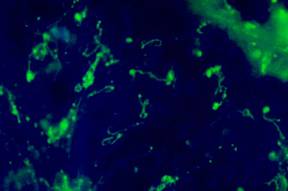
We have seen a few cases of leptospirosis (lepto) in the last few weeks. It is something we usually only recommend vaccinating for in dogs that spend a lot of time outside, hunting dogs, etc. The dogs that we recently diagnosed with it were dogs that lived in town and we considered to be more inside dogs. This has been a bit concerning for us, so we have started to talk about lepto and the vaccine more with every annual examination and new puppy visit. We also want everyone to be aware that it is out there and to protect your dog as best as possible.
Leptospirosis Bacteria

The CDC has a great website with information about lepto and its concerns for pets and people. We encourage you to check it out at http://www.cdc.gov/leptospirosis/pets/index.html. Our webite's "petlibrary" also has information about it. Just type leptospirosis into the web browser to get a list of articles.

Tuesday, July 15, 2014

Dry Eyes - KCS


We have been seeing a few dogs with KCS (Keratoconjunctivitis Sicca) or dry eye. 

KCS is diagnosed by a test called a Schirmer Tear Test which measures the amount of tears produced in a set time frame.  This condition occurs when there is a deficiency in the water portion of the tears which accounts for 95% of the tear volume. Without tears, the eyes become irritated, the conjunctival tissues become red and inflammed, and in time the cornea itself wilt turn brown and gooey with eventual blindness. 

Schirmer Tear Test

Usually what you will notice first at home is green/yellow discharge that you have to clean out of the eye several times daily. 

Untreated KCS


Tears are essential to the comfort of your pet's  eyes but they do more than just provide lubrication. Tears contain anti-bacterial proteins, salts, sugars and even oxygen to nourish the eye.  The flush away irritants and infectious agents that are constantly getting into your pet's eyes.  

Treatment is available in the form of eye medications which your veterinarian will discuss with you.

Tuesday, January 28, 2014

Polar Vortex Temperatures:


We have had a lot of people concerned about this cold weather and their four legged friends. Sometimes we forget that our pets are just as accustomed to the warm shelter of the indoors as we are. We are recommending that all outdoor animals be brought inside or given appropriate heated shelter during these extreme temperatures.  

Some animals can remain outside safely longer in the winter than others. In some cases, it's just common sense: long-haired breeds like Huskies will do better in cold weather than short-haired breeds like Dachshunds. Cats and small dogs that have to wade shoulder-deep in the snow will feel the cold sooner than larger animals. Your pet's health will also affect how long she can stay out. Conditions like diabetes, heart disease, kidney disease, and hormonal imbalances can compromise a pet's ability to regulate her own body heat. Animals that are not generally in good health shouldn't be exposed to winter weather for a long period of time. Very young and very old animals are vulnerable to the cold as well. Regardless of their health, though, no pets should stay outside for unlimited amounts of time in freezing cold weather. 

Also remember that if you park outside cats will curl up against almost anything to stay warm--including car engines. Cats caught in moving engine parts can be seriously hurt or killed. Before you turn your engine on, check beneath the car or make a lot of noise by honking the horn or rapping on the hood. 

We hope this information helps a little. Most of it is common sense in regards to pet care. Remember that if it’s cold for you, then it’s also cold for your pets.


We hope everyone stays warm & safe during this polar vortex.

Tuesday, December 10, 2013

WHAT IS THE IMPORTANCE OF AN ANNUAL PHYSICAL EXAM?


WHAT IS THE IMPORTANCE OF AN ANNUAL PHYSICAL EXAM? 

I can tell you my personal pet story to help answer this question. I have a 3 year old cat that I rescued about 2 years ago. She was examined and vaccinated when I first adopted her and found to be healthy. About 6 months later I brought her in for a dental cleaning.  At that time she was found to be healthy and blood work was all normal. Six months after that it was time for her yearly annual.  When I brought her in, she all of a sudden had a very serious heart murmur that was not present in the 2 exams prior. 

Early detection has allowed me to keep a close eye on her murmur and be proactive in her cardiac health. All of the papers I read on her condition said that after diagnosis, most pets will live for about 1 year. It has been over a year now and she is still doing great. We make sure to monitor her closely. If it was not for her physical exam we would have never found out that she has this cardiac condition. 

I hope this helps answer the question as to why annual physical exams are needed to maintain pet health. 

Thank you for listening to my story,
Sarah K. (PVAH team member)

Tuesday, November 5, 2013

Thanksgiving Concerns


As we all know dogs and cats can be trouble makers when they want to be. We want to remind everyone of this prior to Thanksgiving. This is the day with all the great smells filling up the house that it seems like our pets always get into more trouble than we expect. We ask you to be cautious of your pets around the Thanksgiving Day food, bones, and everything else that would normally not be out. The link below shows this past years x-ray winners from Veterinary Practice News. Some of the images are graphic, so please only look if your stomach can handle it! If you do follow the link, you will see all of the abnormal things some pets ate. The thing to focus on is that two of them ate knives, so keep a close eye on the carving knife after you cut the turkey. 

 
Be well and have a wonderful Thanksgiving Day. We at PVAH are thankful for all of our great clients and furry friends.